That sounds useful. The bigger question is whether it feels like an iPhone you’d want to carry every day.
Two screens, two ways to use it
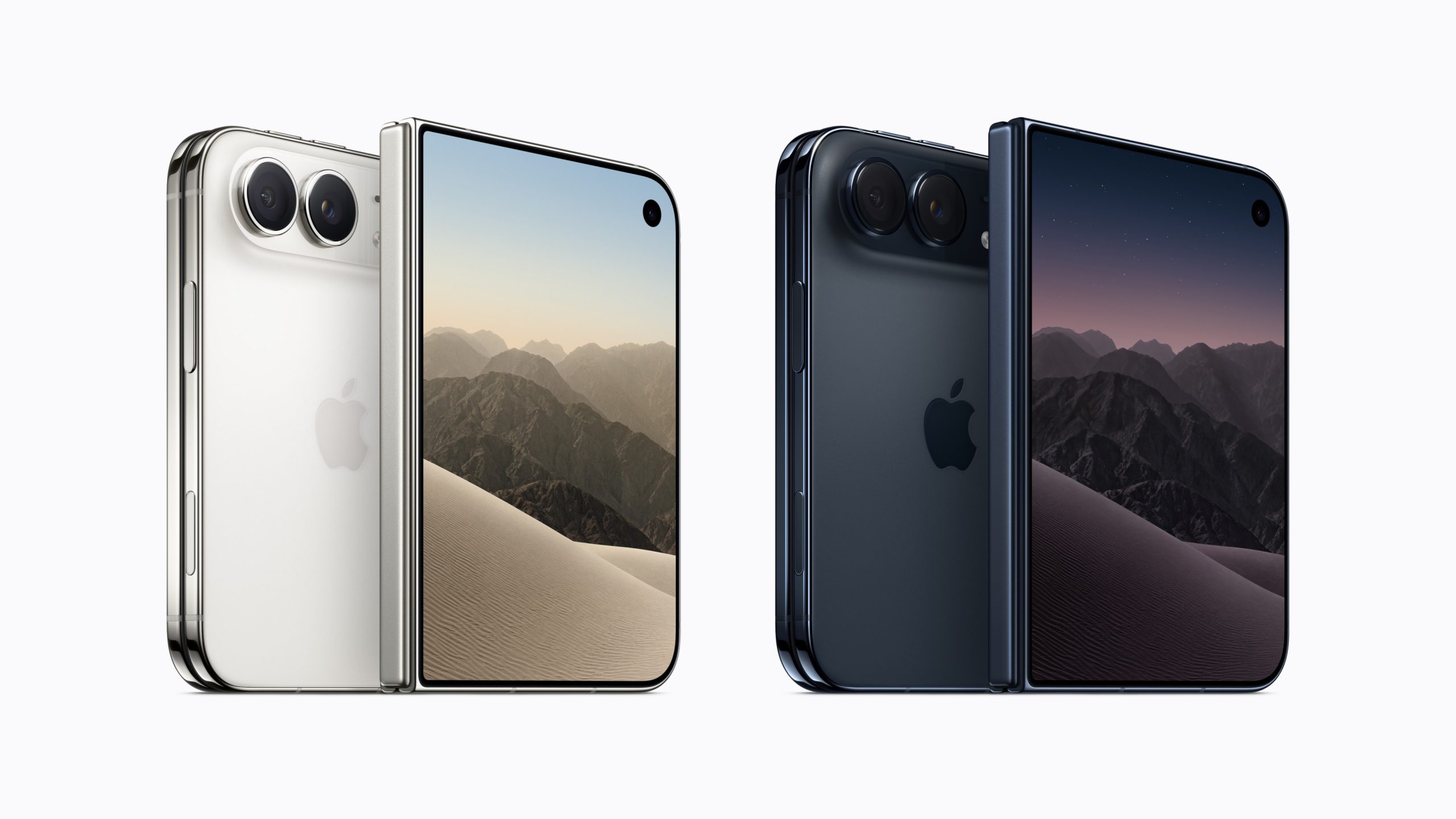
When closed, the iPhone Duo has a 5.4-inch outer display. Open it and you get a 7.6-inch inner display, the largest Apple has put on an iPhone. Both screens support ProMotion and Always On, and Apple says they can reach 3,000 nits of peak brightness outdoors.
The inner screen has a finish designed to reduce glare and make the crease less noticeable. That’s promising, though the real test will be how the screen looks and feels after months of opening and closing it.
Apple also says the Duo will support the USB-C Apple Pencil later this year. That could make the open screen handy for quick notes, sketches, and marking up documents.
Opening it should actually change what you can do
The most interesting part of the Duo may be its software. For the first time on an iPhone, you can put two apps side by side in Split View. You can also open two windows of the same app, switch between apps, and save app pairs you use together.
Think of checking a map while messaging a friend, comparing two products in Safari, or keeping your notes open beside a video. Those are small things, but they’re the kinds of things that could make the larger screen worth opening.
The Duo runs iOS 27.1 at launch. It also includes Apple’s new Siri AI features, although availability depends on your language and region.
What about the camera, battery, and durability?
The iPhone Duo uses Apple’s A20 Pro chip, the same chip found in the iPhone 18 Pro models. Apple says it has designed the phone’s cooling system to keep performance steady during demanding tasks such as gaming and multitasking.
The foldable design gives you new ways to frame photos and video without holding the phone the whole time. As for battery life, Apple rates it for up to 31 hours of video playback on the inner screen or up to 44 hours on the outer screen. Those are Apple’s test figures; everyday battery life will depend on how often you use each display.
Apple has built the Duo with a titanium frame, a reinforced hinge, and an IP68 rating for water and dust resistance. It uses Touch ID in the side button rather than Face ID. The phone is also eSIM-only worldwide, so check your carrier’s eSIM support before buying.
iPhone Duo price and release date
The iPhone Duo starts at $1,999 in the US with 256GB of storage. It also comes in 512GB, 1TB, and 2TB versions, in Star White or Night Sky. If you’re considering one, our iPhone Duo guide takes a closer look at its features, US pricing, and which storage size makes sense for you.
Preorders begin October 16, 2026, and the phone goes on sale October 23 in the first group of countries, including the US.
Our first take
The Duo makes the most sense if you often wish your iPhone had more screen space but don’t want to carry a second device. Split View gives that extra space a practical reason to exist.
At $1,999, though, this is a phone to try in person before making a decision. We’d want to see how comfortable it is to use closed, how visible the crease is in normal light, and what battery life looks like when both screens are part of a regular day.
Source: Apple’s iPhone Duo announcement.


0 Comments
Share your thoughts with other AppleBlog readers.